
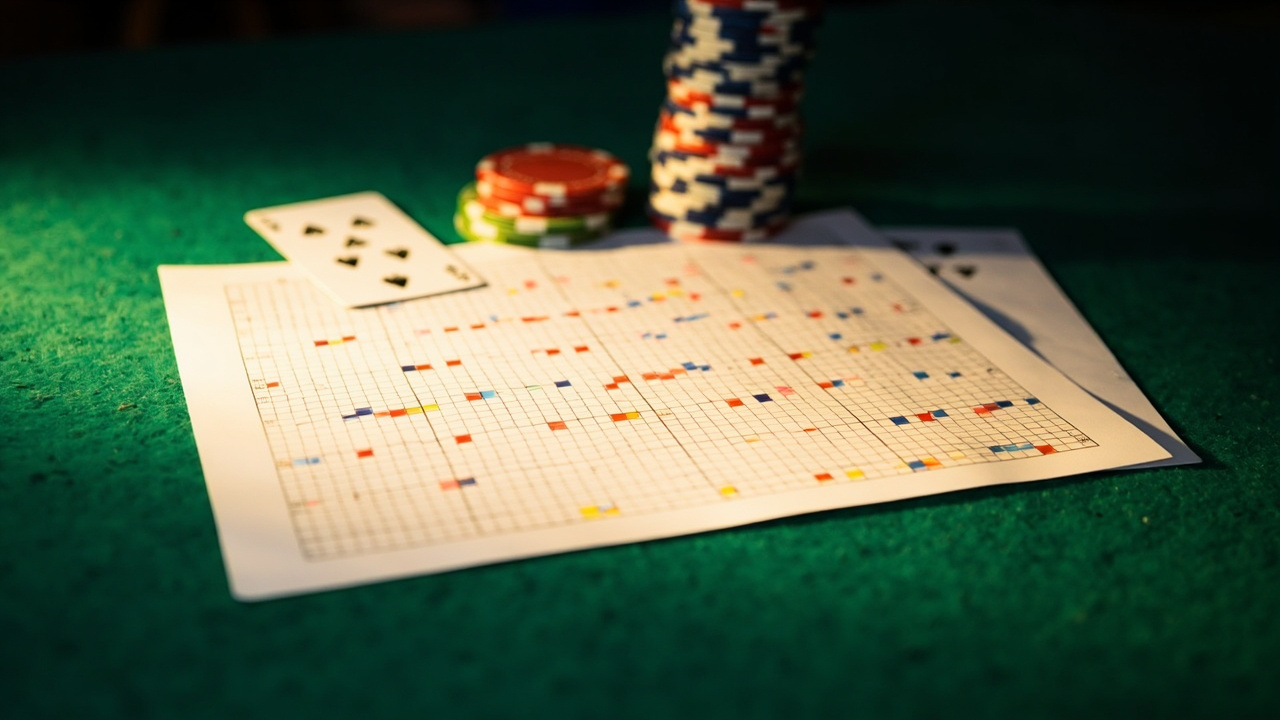
If you have ever scrolled through a blackjack basic strategy chart on a phone and lost your place halfway through a hand, you know the frustration. I have spent years watching campaign performance and conversion quality across global iGaming markets, and the pattern is consistent: players who lean on a clear chart stay longer and make fewer costly mistakes than those guessing every turn. For an Australian audience playing on browsers or apps, the real test is whether that chart renders cleanly, loads quickly, and sits where your thumb can actually reach it without fighting a cluttered interface. A decent mobile setup should feel like a practical tool, not a novelty.
Reading the Chart Without Second-Guessing Yourself
A blackjack basic strategy chart is really just a decision map, and the moment you treat it like a rigid rulebook you have already lost the point. The chart tells you when to hit, stand, double, or split based on your hand and the dealer’s visible card, but the value comes from how quickly you can reference it during a live session. On a well-built mobile page, the grid should scale without shrinking the text to unreadable sizes, and the tap targets need enough padding so you are not accidentally opening a different section while trying to check a single line. I have seen acquisition funnels where players bounce because the chart sits behind a slow-loading overlay or forces endless sideways scrolling, and that friction kills retention faster than any bonus mechanic ever could.
For players around Geelong who might be checking a hand during a quiet arvo at the café or after work, the layout matters more than the branding. A responsive chart that reflows to portrait mode without breaking the rows is worth more than a flashy welcome offer that disappears behind three verification screens. When I judge a platform’s mobile fit, I look for whether the chart loads as static content rather than a heavy script, because performance directly affects whether someone actually uses the tool or just closes the tab. If the navigation buries the chart under menus that demand pinch-to-zoom just to read the dealer card column, the whole experience feels like a conversion trap rather than a genuine playing aid.
A Beginner’s Walkthrough for Using the Chart at the Table
If you are brand new to this, here is how I would walk a mate through it without overcomplicating the first session. Step one is to open the chart on your phone before you sit down, then find the row that matches your total and the column that matches the dealer’s up card. Step two is to read across that intersection and note the single action the chart recommends, whether that is hit, stand, double, or split, and resist the urge to second-guess it because a gut feeling suddenly feels louder. Step three is to apply that same read on every hand until the pattern sticks, because the chart is built on probability, not on whatever happened on the previous spin or hand. Step four is to stop chasing losses by ignoring the grid, since the whole point of a blackjack basic strategy chart is to remove emotion from the decision loop. Step five is to keep the phone on a flat surface or use a tablet stand if you are playing on a browser, so you are not balancing the device on one knee while trying to track cards. Step six is to treat the chart as a reference, not a promise, because it narrows the house edge but never guarantees a winning hand or a clean withdrawal at the end of the night.
When I run acquisition tests, the players who stick around are the ones who treat the chart like a steady habit rather than a quick fix, and that mindset is what separates a useful session from a costly one. A platform that makes the chart easy to open, easy to read, and easy to keep open while you play is doing the basics right, and the basics are what drive long-term engagement more than any stacked promotion.
What Mobile Performance and Navigation Should Actually Look Like
A solid mobile setup for a blackjack basic strategy chart should load in a single tap, hold its layout when you rotate the screen, and keep the grid readable without forcing you to zoom in and out on every hand. I have reviewed enough campaign flows to know that responsiveness is not just about whether the page fits on a smaller screen, but whether the chart stays usable when the connection dips or the browser reloads in the middle of a session. Navigation should let you jump straight to the chart without wading through promotional copy, and the page should respect your time by keeping the decision grid near the top rather than hiding it under a carousel of bonus banners. Payment options and registration steps matter here too, because if a player has to jump through multiple currency conversions or wait on a clunky verification step before they can even test the chart, the mobile experience has already failed the practical test. https://kangaroo88casinologin.com
For a Geelong-based player who might be hopping between Wi-Fi and mobile data, a chart that stays stable across those switches is the difference between a tool you keep returning to and one you forget after a frustrating first attempt. I would rather see a platform that keeps the chart lightweight, uses clear tap targets, and presents the grid in a way that works on both browser and app than one that leans on heavy graphics and calls it a premium feature. The conversion quality comes from whether a new player can actually use the chart in the first minute, not from whether the site looks polished in a screenshots gallery.
Fit, Limits, and the Reality Behind the Numbers
A blackjack basic strategy chart is most useful when it matches the way you actually play, and that means paying attention to the game rules, the table limits, and the way the platform structures its bonuses. If the chart assumes a standard deck setup but the game you are playing uses a different number of decks or a different dealer stand rule, the chart’s recommendations can drift, so it pays to check the game details before you treat the grid as universal. I have seen players chase a bonus mechanic that looks generous on paper but quietly changes the expected value of each hand, and that is where a chart becomes a reality check rather than a shortcut. The practical move is to line up the chart with the specific game you are playing, note the currency and limits that actually apply to your session, and treat any bonus terms as a separate calculation rather than folding them into the strategy itself. Top Free Casino Games No Downloads
Blake Baker, iGaming Regulatory Consultant, Pacific Wager Analytics, has pointed out that players often overvalue a chart when they ignore the rule variations baked into the specific game they are sitting at, and that caveat matters because a chart is only as useful as the rules it is built around. Charlotte Fraser, Independent iGaming Expert, Coastal Wager Research, has also noted that mobile usability can make or break whether a player actually references the chart in real time, especially when the page is crowded with promotional elements that distract from the decision grid. Those points line up with what I see in acquisition data: the players who benefit most are the ones who use the chart as a steady reference, check the game rules first, and do not assume a slick interface means the numbers have changed in their favour.
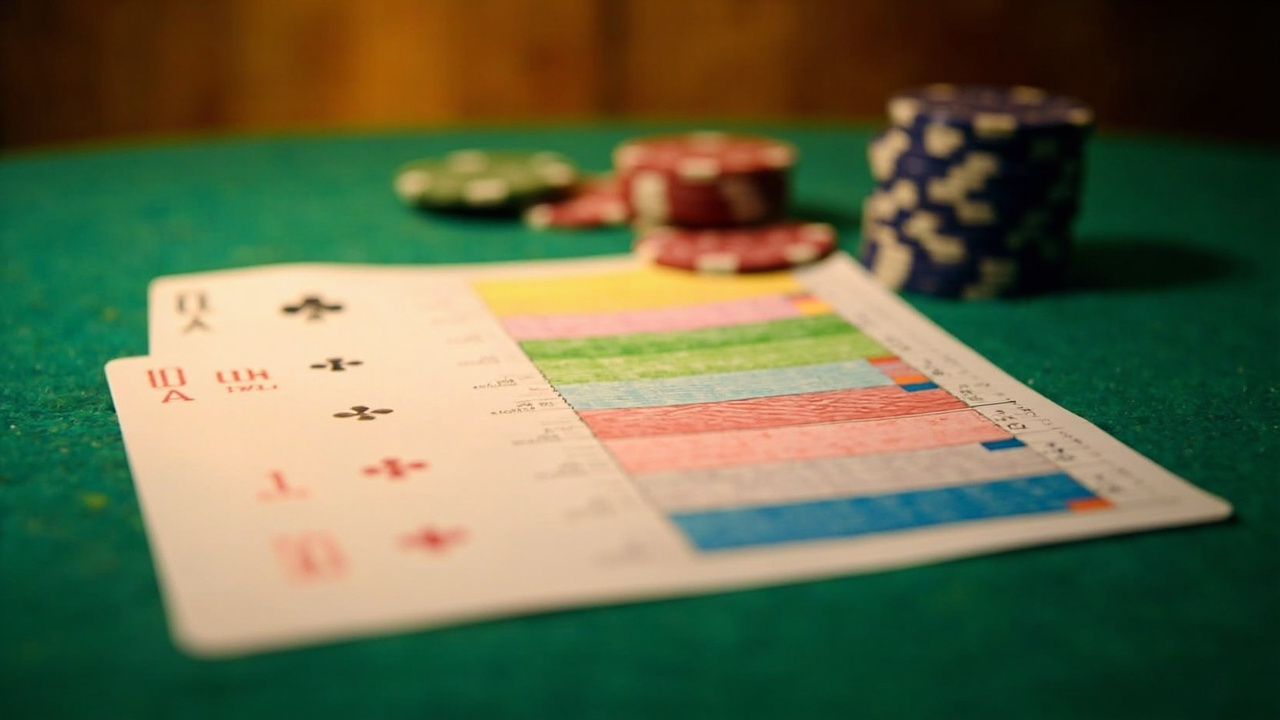
Quick Glossary of Terms Used Here
- Hit: take another card to increase your hand total.
- Stand: keep your current total and end your turn.
- Double: double your initial stake for one additional card.
- Split: separate a pair into two hands with a matching stake on each.
- Dealer up card: the dealer’s visible card used to guide your decision.
- House edge: the mathematical advantage the game holds over the player over time.
If you are looking for a practical way to keep your decisions steady on a phone or tablet, the chart is worth using as a reference rather than a crutch. A mobile-friendly layout, a clear grid, and a game that matches the chart’s assumptions will do more for your session than any flashy promise, and that is the kind of setup I would actually recommend to someone who wants to play with their eyes open.